
Kategóriák
TOP könyvek

Csikai Zsuzsa: „Egész Oroszország a mi cseresznyéskertünk”. Csehov újrafordítások és adaptációk Írországban
3 950 Ft
3 555 Ft
ÚJ
Csikai Zsuzsa: „Egész Oroszország a mi cseresznyéskertünk”. Csehov újrafordítások és adaptációk Írországban
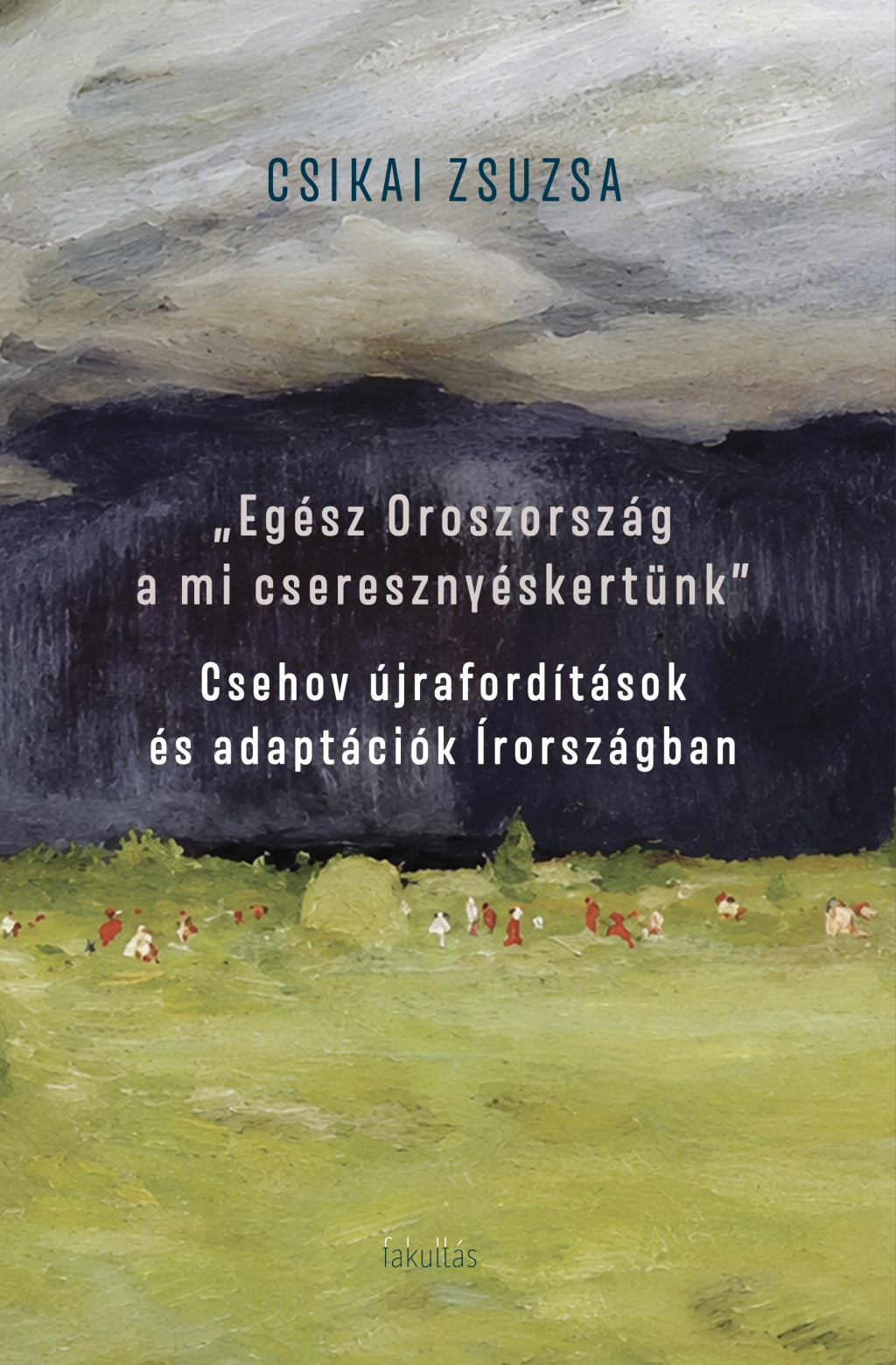
Miért fordítják újra és újra Csehov drámáit, és mi történik velük, amikor egy másik ország színházi és nyelvi közegébe kerülnek? Csikai Zsuzsa kötete erre a kérdésre az ír színház példáján keres választ. A könyv azt vizsgálja, hogyan szólaltak meg Csehov művei Írországban az 1980-as évektől napjainkig, s miként váltak az újrafordítások és adaptációk nem pusztán közvetítéssé, hanem önálló értelmezéssé is.
10
Megtakarítás
395 Ft
3 555 Ft
3 950 Ft
A vásárlás után járó pontok:
71 Ft
Részletek
Miért fordítják újra és újra Csehov drámáit, és mi történik velük, amikor egy másik ország színházi és nyelvi közegébe kerülnek? Csikai Zsuzsa kötete erre a kérdésre az ír színház példáján keres választ. A könyv azt vizsgálja, hogyan szólaltak meg Csehov művei Írországban az 1980-as évektől napjainkig, s miként váltak az újrafordítások és adaptációk nem pusztán közvetítéssé, hanem önálló értelmezéssé is.
A kötet bemutatja, hogy az ír drámaírók és fordítók – többek között Thomas Kilroy, Brian Friel, Frank McGuinness, Tom Murphy, Lucy Caldwell vagy Conor McPherson – miként léptek párbeszédbe az orosz klasszikussal. Az elemzésekből kirajzolódik, hogy a fordítás és az adaptáció határa sokszor elmosódik: a szövegek egyszerre őrzik Csehov világát és formálják azt az ír történelem, nyelv és társadalmi tapasztalat felől.
A könyv megmutatja, hogy Csehov ír „utóélete” a posztkoloniális önértelmezéshez is kapcsolódik. Az ír angol nyelvű újraírások nemcsak a brit színházi hagyományhoz viszonyulnak, hanem ahhoz a kérdéshez is, hogyan lehet egy klasszikus művet saját hangon megszólaltatni. A kötet így egyszerre szól drámatörténetről, műfordításról, kultúraközvetítésről és identitásról.
A világos érvelésű, gazdag példatárra épülő munka a színház, az irodalom és a fordítás iránt érdeklődő olvasóknak egyaránt hasznos olvasmány. Az elemzés nemcsak szövegekre, hanem előadásokra, kritikai visszhangokra és tágabb történeti összefüggésekre is figyel, ezért jól érzékelteti, miként él tovább egy klasszikus szerző más nyelven, más kulturális közegben, mindig részben ugyanazként, részben pedig új műként.
Zsuzsa Csikai
“All of Russia is Our Orchard”
Chekhov Retranslations and Adaptations in Ireland
Zsuzsanna Csikai’s book examines the Irish afterlife of Anton Chekhov’s plays over a period of more than four decades. It demonstrates that retranslations and adaptations are not simply means of transmitting a classical body of work, but active forms through which the receiving culture interprets itself. At the centre of the volume is the dialogue that Irish playwrights conduct with Chekhov, with their own theatrical tradition, and with the social realities of their time. The history of these works is therefore simultaneously a history of translation and adaptation, a chapter in Irish theatre history, and an account of the transformation of postcolonial identity. The study follows the development of Chekhov’s “Irish voice” from the cultural resistance of the 1980s to the globalised theatre of the twenty-first century.
The book’s theoretical point of departure is the broad concept of rewriting: both translation and adaptation recreate the source text in a new linguistic, cultural, and historical environment. The boundary between them is not clear-cut, especially in Irish theatrical practice, where the playwrights who “translate” Chekhov generally do not know Russian, but work from literal translations or earlier English versions. Their works nevertheless function as translations because the authors, theatres, critics, and audiences all regard them as such. Adaptation, meanwhile, has a palimpsestic character: the original remains visible beneath the new work, and the audience perceives repetition and difference at the same time. The translator or adapter is therefore not an invisible intermediary, but a creative partner whose decisions are shaped both by personal poetics and by the needs of the target culture. Through comparative textual analysis, the examination of productions and critical responses, and the reconstruction of historical and political contexts, the book makes the significance of these decisions visible.
The first wave of Irish Chekhov rewritings can be understood in relation to Ireland’s colonial past and its distinctive linguistic situation. As a result of colonisation, English largely replaced Irish Gaelic and became the mother tongue of most Irish people, while remaining the language of the former colonial power. For a long time, the classics of world literature reached Irish audiences through British English translations. From the 1980s onwards, Irish playwrights began to present canonical works in their own variety of Irish English. In doing so, they rejected the exclusive authority of British English and demonstrated the literary capacity of their own language. This practice formed part of the programme of the “decolonisation of the imagination,” for which Brian Friel and Stephen Rea’s Field Day Theatre Company provided an important forum. In this context, translation becomes a form of cultural emancipation: it does not merely transmit a foreign work, but also rearranges the power relations between languages and cultures.
This process proved especially productive in the case of Chekhov because English-language stages had long been dominated by a strongly Anglicised, melancholic, and apolitical image of the Russian playwright. Early translations often pushed the specific features of Russian society, the political contexts of the plays, and Chekhov’s irony and comedy into the background. Irish rewritings therefore performed a double corrective function. They made Chekhov available in a language that Irish audiences could recognise as their own, while also liberating his works from the nostalgic interpretations established by the British theatrical tradition. Thomas Kilroy’s adaptation of The Seagull relocates the action to late nineteenth-century western Ireland, where the declining Russian aristocracy is replaced by the Anglo-Irish landowning class. This elite represents not only a privileged social group but also colonial rule. The adaptation therefore enriches Chekhov’s conflicts with the history of the Land War, cultural nationalism, linguistic subordination, and internalised feelings of inferiority. Paradoxically, the Irish setting makes the play more authentically foreign and, in a sense, more “Russian,” because it dismantles the world of English gentility created by earlier translations.
Brian Friel’s early Chekhov translations follow a similarly strong domestication strategy. The Irish speech rhythms and cultural references of Three Sisters connect the Russian story with the Irish experience of stagnation, longing for elsewhere, and an unattainable future. The political force of the translation is already present in the fact that Chekhov’s characters speak Irish English. The later Uncle Vanya remains closer to the source text, yet its themes of land, social paralysis, self-contempt, and the longing for peace acquire new meanings during the period in which the Northern Irish conflict was approaching its conclusion. One of the book’s important findings is that decolonisation does not require a single, unchanging translation method. Once the cultural legitimacy of Irish English becomes more secure, emphatic domestication becomes less necessary, and rewritings begin to represent the relationship between the familiar and the foreign in different ways.
Works produced in the 1990s and 2000s increasingly preserve the foreignness of the source text and shift their attention from questions of political community towards the inner world of the individual. Frank McGuinness’s Uncle Vanya retains Russian names, forms of address, cultural references, and even expressions that may sound unusual in English. Its deliberately “translated” language encourages audiences not merely to search for reflections of themselves in another culture. Tom Murphy’s version of The Cherry Orchard is likewise close to the source text, while using vivid and contemporary Irish English. This very closeness reveals that the loss of home, emigration, and social decline are already present in Chekhov’s world in forms that can enter into dialogue with Irish experience. Friel’s later one-act plays represent a more personal development. Love, memory, self-deception, and the human need to construct stories move to the foreground. The Yalta Game and Afterplay explore how people create fictions about their own lives in order to make them bearable.
The twenty-first-century Irish Chekhov corpus can no longer be described through a single ideological programme. In a globalised and multicultural environment, translations that remain close to the original Russian setting and address international audiences exist alongside strongly localised adaptations. Michael West’s two versions of The Seagull demonstrate that retranslations enter into dialogue not only with the original but also with one another and with social change. His estranging 1999 text was followed in 2016 by a substantially revised version containing contemporary Irish references, new media, and a same-sex relationship. Lucy Caldwell relocates Three Sisters to Belfast in the 1990s and explores both the hopes and limitations of the peace process, the persistence of trauma, the marginalisation of women’s experiences, and the connection between sectarianism and racism directed against immigrants. By contrast, Conor McPherson’s London production of Uncle Vanya highlights Chekhov’s strikingly modern ideas about human relationships and the destruction of the natural environment for an international audience.
The most recent adaptations show that Chekhov’s plays can absorb the urgent concerns of the present without losing their ambiguity. Konstantin, which imagines an afterlife for The Seagull, connects questions of artistic appropriation, consent, gendered power, addiction, artificial intelligence, social media, and ecological crisis with the problem of whether theatre can remain viable. Ciara Elizabeth Smyth’s Three Sisters uses contemporary Irish speech, stronger dramatic action, and greater agency for its female characters to reveal that continuous change takes place beneath the surface of a play traditionally regarded as static. These works do not simply update Chekhov. They rearrange the moral and power relations between the characters while preserving the Chekhovian balance between tragedy, comedy, and the suspension of judgement.
The book ultimately concludes that the Irish “post-Chekhovian” canon is not a collection of secondary or derivative works, but an independent and artistically rich body of writing. Its development reveals three major shifts of emphasis. The initial phase of decolonising domestication is followed by rewritings that show greater respect for the foreignness of the source text and concentrate more closely on personal experience. This is followed in turn by a diverse, transnational phase that engages both with local historical experience and with the concerns of the globalised present. Translation and adaptation do not merely preserve the classical work; they continually make it present. They address new communities, challenge earlier interpretations, and encourage the receiving culture to reflect upon itself. Through Chekhov, Irish playwrights reconsider the changing meanings of their language, history, and society. The book’s central conclusion is therefore that Irish rewritings did more than bring the Russian classic closer to the Irish stage. They also contributed to a transformation in the ways Irish people understood their own language, cultural position, and collective identity.
Adatok
ISBN:
9786155848292
Megjelenés:
2026. augusztus 25.
Nyelv:
magyar
Terjedelem:
168 oldal
Méret:
B/5 (155x235 mm)
Kötésmód:
kartonált, ragasztókötött
Cikkszám:
9786155848292
A megtekintett könyv alapján ajánljuk